
Once the old roof has been removed, the rest of the roof installation should go smoothly. Often, removing the old shingles, especially if the roof is dual-layered, can be the hardest part. There are several parts of installing shingles that can be tricky, so it is a good idea to seek assistance from someone experienced with installing shingles, but it is not rocket science either and is something that a handyman can teach himself.
Table of Contents
- Tools Required
- Inspecting the Roof for Damage
- A Quick Word About Ridge-Vent
- A Word About Loading the Roof
Tools Required
Measuring Tape and Chalk Line: Measuring is one of the most important and trickiest parts of installing a new roof. A chalk line is used as a base when installing the shingles, so they are installed in a straight line.
Staples and Slap-hammer Felt paper is layed between the shingles and roofing board, providing an extra layer of moisture protection. To temporarily hold the felt paper in place, it should be stapled down using a slap-hammer.
Nailgun and Hammer: Depending on the builder, either a hammer or nailgun will be used to install the new shingles. A traditional hammer is preferred, as there is less risk of improperly installing the shingles or nailing them too deep. However, it is much more time consuming, so most contractors today use a nail-gun. Home contractors that do use hand nailing will usually advertise this as a selling point of their home renovation business.
Ladders: A ladder is used to get onto and off of the roof. Since you will usually be carrying a lot of items up and down the ladder, it is a good idea to use a sturdy straight ladder, which can be leaned directly against the house, instead of an a-frame ladder.
Inspecting the Roof for Damage
You should already have most of your supplies, but before you begin installing new shingles, it is a good idea to inspect the old roof for any damage, as well as doing a final inspection to make sure any nails, staples, or other items have been removed.
Usually water damage is pretty obvious, both in the attic and certainly once the old roof is removed, by the discoloration of wood. However, it is still a good idea to walk the entire length of the roof, inspecting the wood and ensuring that it is not rotten or otherwise damaged.
One of the most common areas for water damage is around vents, chimneys, and where two different roof pitches meet, so you should pay extra attention around these areas.
If you found any issues with the roof, such as rotten wood, you should address this before installing shingles.
A Quick Word About Ridge-Vent
A roof must have proper ventilation, to prevent moisture and heat buildup, which is essential to maintaining your shingle’s lifespan.
Many older homes used ventilation fans or even wind-powered vents, to provide ventilation. However, most new homes now use ridge-vent, which is a special type of capping that is installed along the ridgeline of a home.
Typically, a small portion of the roof-peak is removed, with the plastic ridge-vent being placed ontop of exposed peak.
While the ridge-vent itself will be installed last, if you are going to install ridge-vent and need to cut the roof, it is a good idea to do this first.
A Word About Loading the Roof
One of the most difficult parts of installing a roof is carrying the 80 pound bags of shingles onto the roof.
Depending on the builder and the roof, the shingles are sometimes preloaded. You may be able to pay the delivery man a little extra to hoist the shingles onto the roof, although this is usually against company policy for the delivery driver. Many professional roofing contractors use a lift, to achive the same effect and avoid having to carry the shingle bundles onto the roof.
While pre-loading the roof with shingles can save time, it does present a few obstacles and requires some planning. For example, you will most likely have to move the shingles a few times, as you tear off the roof. You are also loading the roof down with a lot of weight, so you want to be sure the roof wood is in good condition and distribute the weight evenly across the rafters.
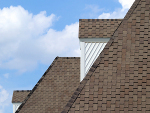 Installing a new roof is a very big project and, while not overly complicated, can be extremely strenuous. One of the biggest, and also most labor intensive parts, of a new roof installation is removing the old shingles. Even if you do not plan on doing the actual roof installation yourself, doing the demo can save you a big chunk of money and is not difficult at all, as long as you do not mind getting your hands dirty.
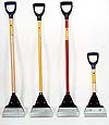
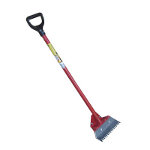 Tear Off Tools: There are not many tools required to do the roof demo, with a sturdy tear-off tool, usually being the most important. A tear-off tool is a specially designed tool used to remove shingles. It has a triangle shaped head and long handle, allowing you to easily pry off shingles. Since it has teeth, it is easy to use it to remove nails and other debris.
 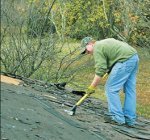 Once you have the tools assembled, you can begin tearing off the shingles. Using the tear-off tool, you can pry under the shingles, removing both nails and shingles. Depending on the condition of the old shingles, it is usually possible to take them off in somewhat large sections.
 When you own a home, it is easy to feel like it is a money pit, as there is almost always things that need to be done, such as routine maintenance or renovations. However, in addition to helping improve the value of a home and reducing the risk of further damage, home repairs are also tax deductible. As a result, there are many advantages to doing both repairs and home improvements.
 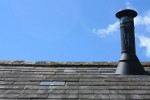 Installing a new roof or replacing an existing roof is often the biggest expense a homeowner will face, however the roof is also one of the most important parts of a home, with a leaky or improperly installed roof being very expensive and potentially affecting many other areas of the home.
 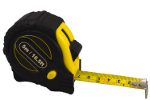 The total square footage of your roof is one of the most important measurements, as this is used to determine how many shingles you need to buy, as well as a number of other materials.
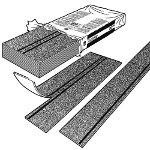 Shingles come in many different shapes, colors, materials, and sizes. Choosing the right type of shingle will often come down to personal preference and budget.
  While shingles are typically the most important and also most expensive part of a roof repair, there are also a number of other supplies and materials that will be needed.
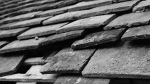 There are few expenses in the home greater than that of installing a new roof. However, fortunately, most shingles are designed to last for twenty to thirty years, often longer, so replacing your roof is not something that most homeowners will do very often. Like most home repairs, in regards to actual technical ability, roof repair and installation is not very difficult.